Brazil is the third-largest pet care market in the world, trailing only the US and China. And yet, within the industry, it’s often still spoken of as an ‘emerging’ market.
That’s not a contradiction. It’s a reflection of where the growth is concentrated. Pet food dominates the Brazilian pet economy to an extent unseen almost anywhere else, leaving enormous room for the rest of the category, from veterinary care to grooming to preventative health, to catch up.
With over 200 million people, 68% of households owning at least one pet, and a culture of pet humanisation that spans generations rather than being a Gen Z or millennial phenomenon, Brazil presents a rare opportunity: a market large enough to rival the US and China in scale, but still young enough in its services and tech infrastructure for founders and investors to get in early.
So what does the Brazilian pet industry actually look like today, and where is it heading next? We spoke to Purina Brazil leadership and founders building in the space, including zazuu and SistemaPET, to find out.

(Source)
The state of the pet care industry in Brazil
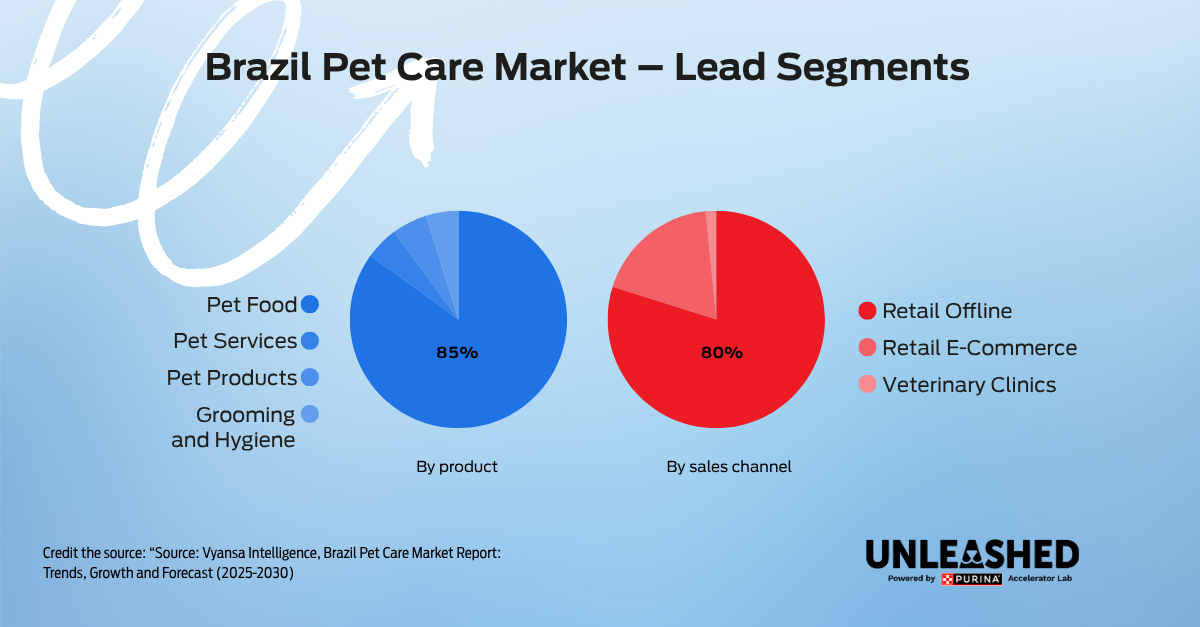
The reason Brazil’s pet care industry is still considered ‘emerging’ could come down to one number: the pet food market share.
Pet food accounts for 55% of China’s USD 13.66 billion pet product industry. In Brazil, that percentage rises to 85%.
It would be easy to assume this is simply a wealth gap, that Brazilian consumers are more price-sensitive and less willing to spend beyond the basics. But data shows there is a growing middle class, especially in the South and Southeast, with stronger purchasing power than before.
Rodrigo Maingué, Business Executive Officer (BEO), Purina Brazil, Nestlé, said, “While affordability is important, what often surprises international observers is how emotionally connected Brazilian pet owners are to their pets. Consumers increasingly seek high-quality nutrition, scientific solutions, premium products, and services that enhance the wellbeing of their pets.”
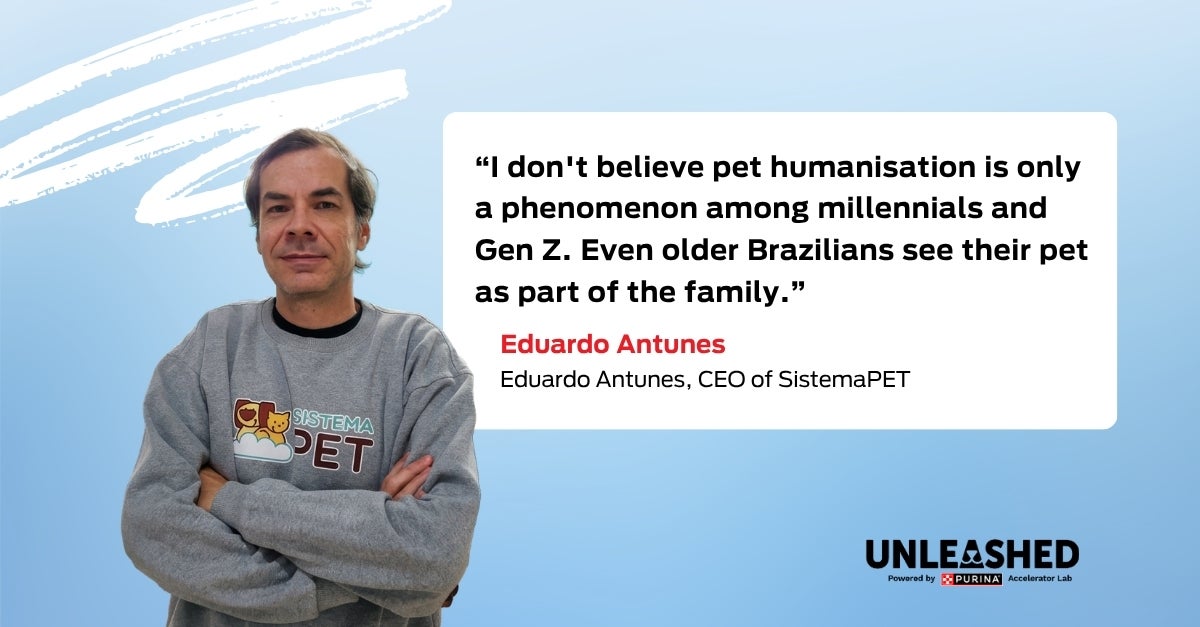
One intriguing aspect of Brazil’s pet care industry is how remarkably consistent attitudes toward pets are across generations. Humanisation and treating pets as family members are not unique to Gen Z and millennials, who want to delay parenthood (although the data shows that they are delaying parenthood). Older Brazilians are adopting pets too and treating them the same way.
Eduardo Antunes, CEO of breeding platform and Unleashed alum, SistemaPET, said, “I don’t believe [pet humanisation] is only a phenomenon among millennials and Gen Z. Even older Brazilians see their pet as part of the family.”
Regional differences in pet care
With a population of over 200 million people and 68% of households owning at least one pet, the Brazilian pet market is naturally incredibly diverse.
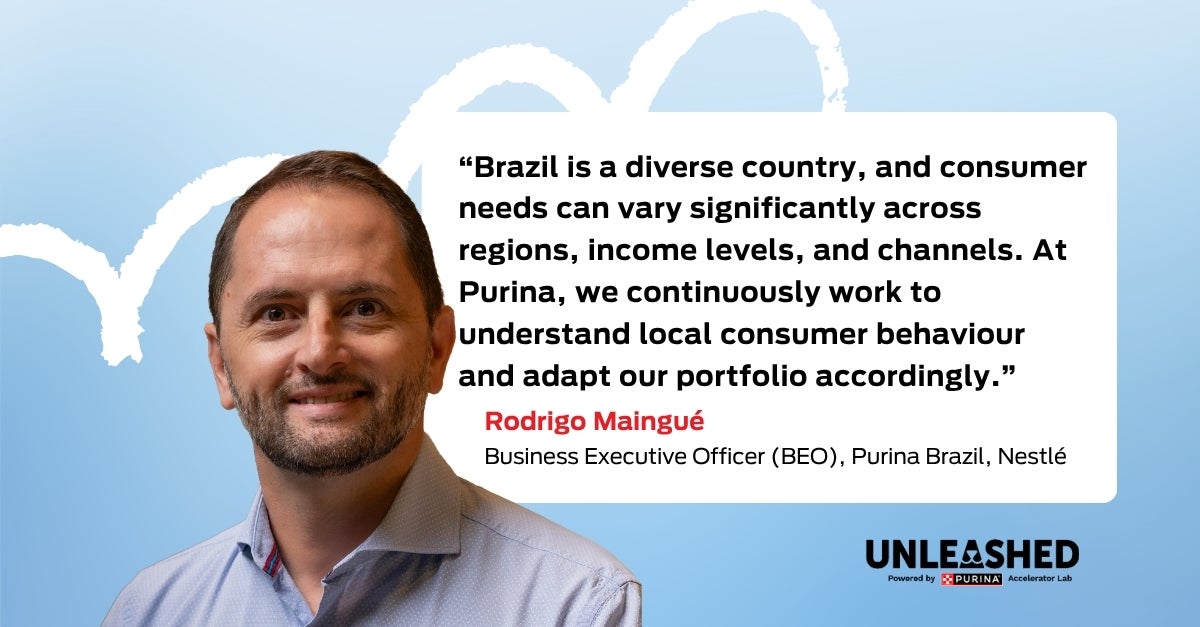
Maingué said, “Brazil is a diverse country, and consumer needs can vary significantly across regions, income levels, and channels. At Purina, we continuously work to understand local consumer behaviour and adapt our portfolio accordingly.”
When we look region by region, some clear patterns emerge. Here’s what I found.
North & Northeast
The North and Northeast have some of the highest numbers of households owning pets, though the South has the largest number of pets overall.
In Rondônia, 64.8% of households have at least one dog, the highest rate in the country.
“The Northeast is experiencing significant development and offers substantial opportunities as pet ownership and consumer spending continue to evolve,” Maingué said.
Midwest
The Midwest is slightly less developed in pet care products and service distribution, largely because it remains more rural.
Maingué said, “The Midwest and North regions present growing opportunities, particularly as access to products, services, and specialised retail channels expands.”
South & Southeast
The South and Southeast of Brazil are the strongest economic hubs, with fast-growing urbanisation and city living.
“The Southeast remains the largest and most developed pet care market, with a stronger concentration of premium products and specialised channels,” Maingué said. “The South also has a sophisticated consumer base and strong growth potential.”
SistemaPET, an Unleashed alum, is based in Florianópolis. Its CEO, Eduardo Antunes, told me, “São Paulo and Rio de Janeiro are the best places for all things pet. For example, there are more dog expositions in São Paulo, and the majority of our users are there. In the South, we also have a stronger economy, so there are more pet services available. But generally, attitudes towards pets are the same across Brazil.”
And that is the key takeaway. While the South and Southeast remain the strongest focus for incumbents and startups alike, treating pets as family members holds true in every corner of the country.
Brazil vs LATAM
When we zoom out to look at the pet industry in Latin America (LATAM) as a whole, Brazil is the dominant player, with the largest number of pet-owning households and the most advanced pet care economy in the region.
This is partly due to scale. Mexico has the second-largest market in the region but is only worth about USD 4.51 billion in 2025, roughly half the size of Brazil’s.
That gap is why Brazil remains an aspirational hub for pet startups across the region, more so than for Brazilian startups expanding into neighbouring countries. With such a large and pet-loving home turf, Brazilian pet startups don’t need to go far to become hugely successful.
Trends in the Brazilian pet care market
Trends within the Brazilian pet care market can be hard to pin down since the country is so large and diverse. Every niche has a market. However, here are some trends that transcend location and even generation.
Diversity of animals
One of the Brazil pet industry’s unique qualities is the sheer diversity of animal species kept as pets. While cats and dogs dominate with around 60 million dogs and 30 million cats, ornamental birds and fish have equally large populations. ABEMPET estimates over 40 million pet birds and 22 million aquarium fish.
This makes ornamental birds the second largest segment in the pet care market, yet one of the least catered to by incumbent pet brands.
There is a huge opportunity for innovation and popularity beyond just cats and dogs.
Cats are the protagonists
“Here in Brazil when compared to the rest of LATAM, cats are becoming the protagonists,” said Juliana Rodrigues, E-business Regional Manager LATAM at Nestlé Purina. “The cat food market is growing 2 times faster than dog food.”
And the data backs her up. So far, cats are appealing more to pet owners across generations, particularly in the South and Southeast of the country, where urbanisation and smaller homes are more common. This shift toward pet cats has led experts to predict that the cat population will grow by 19% by 2030.
Cat tech startups and feline-forward innovation certainly have a bright future here.
Focus on sustainability
No article on the Brazilian pet care industry would be complete without mentioning the Brazilian consumer’s connection to sustainability and the natural world. The Pew Research Center noted in 2025 that 90% of adults in Brazil are either ‘somewhat’ or ‘very’ concerned with climate change.
That concern spills over into how people shop for their pets. Pet owners in Brazil are seeking ‘greener’ solutions that reduce their environmental impact.
Rodrigues said, “Sustainability is a huge trend in the Brazilian pet care market. The Brazilian consumer is looking for different formats, textures, and products that support the natural world we live in.”
Pet care brands that can show that their products or manufacturing processes are more sustainable have a great opportunity for growth in Brazil.
Digital adoption
Like much of the world, e-commerce has risen sharply in LATAM since the pandemic. That said, Brazil’s e-commerce space has matured much faster than in Argentina or Mexico.
“Retail itself is very accelerated in Brazil even when compared with other Latin American countries. For example, e-commerce is very well developed here,” Rodrigues said.
Rodrigo Maingué, Business Executive Officer (BEO), Purina Brazil, Nestlé, also mentioned how pet e-commerce in particular is accelerating, with giants like PetLove building strong brand presence within the pet ecosystem.
Similarly, one of our Unleashed accelerator alums, Hubii, is succeeding in building a digital distribution platform that connects local pet stores with consumers.
Maingué said, “One characteristic of Brazil is that consumers tend to adopt innovations rapidly when they see clear value.”
The accelerated wave of e-commerce among Brazilian consumers is just one example of convenience and value driving adoption.
The opportunity ahead
In my conversations with the Purina Brazil team and our alumni startups, two key opportunities surfaced as prime areas for innovation in Brazil.
Pet services
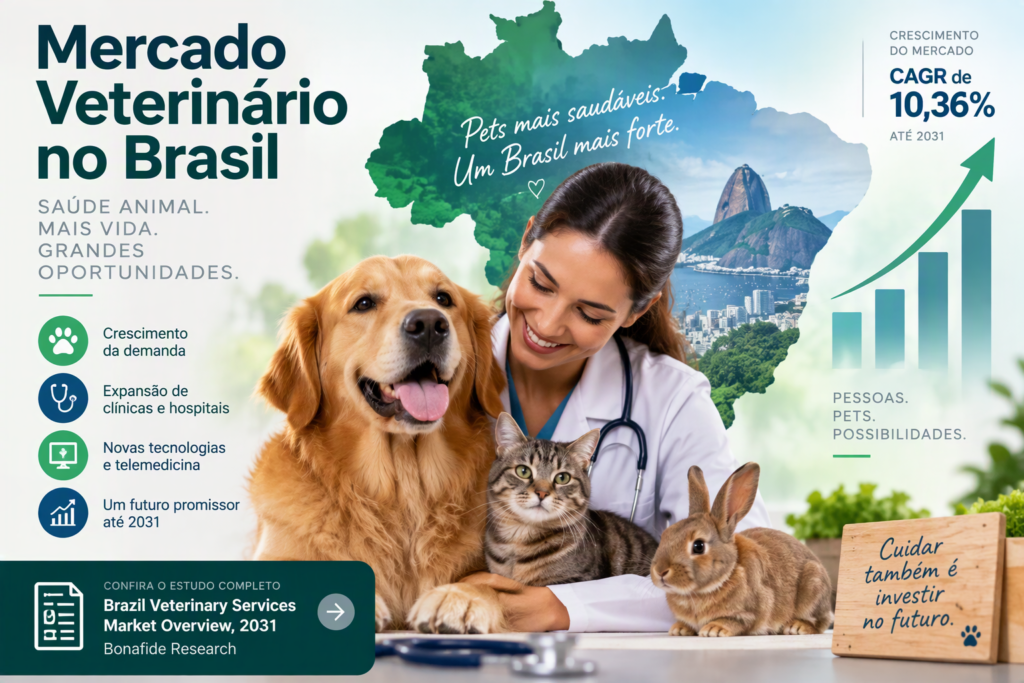
The Brazil veterinary services market generated revenue of USD 3,972.7 million in 2025 and is expected to reach USD 6,729.9 million by 2033 at a Compound Annual Growth Rate (CAGR) of 6.8%.
But the non-vet pet services market is growing even faster. Pet grooming alone is expanding at a 7.8% CAGR. It brought in total revenue of USD 153 million in 2024.
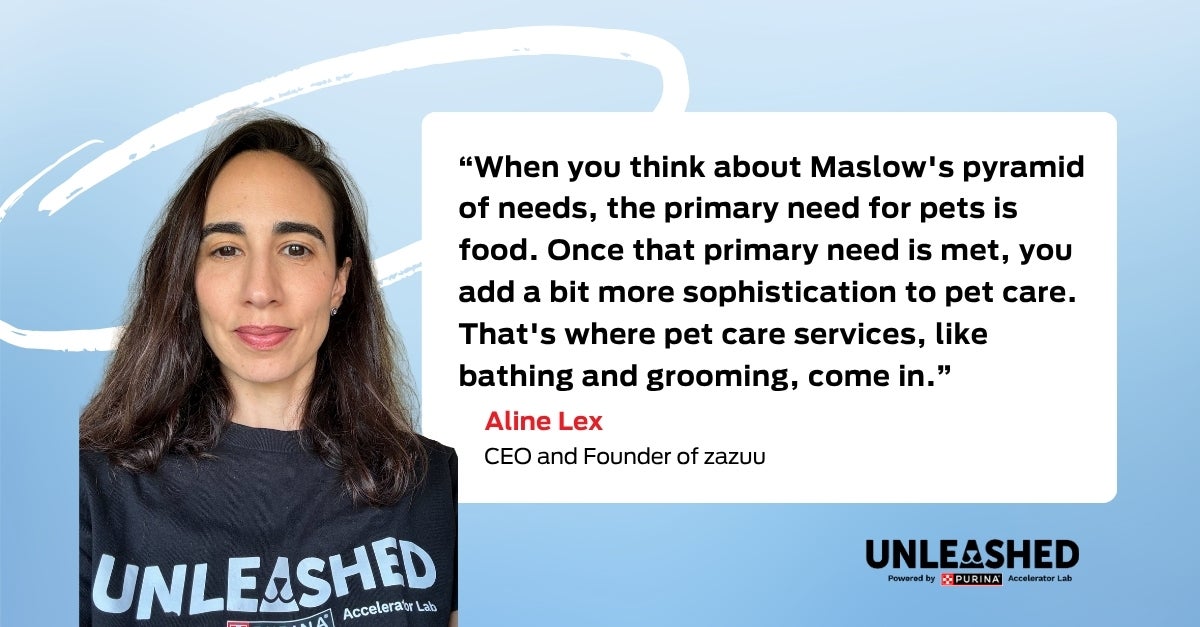
I asked CEO and founder of zazuu, Aline Lex, why.
“When you think about Maslow’s pyramid of needs, the primary need for pets is food. Once that primary need is met, you add a bit more sophistication to pet care. That’s where pet care services, like bathing and grooming, come in.”
zazuu is an Unleashed by Purina accelerator alum that provides a wide range of at-home pet services, with a customer base of over 15,000 pets in 83 cities across Brazil.
Aline continued, “In Brazil, we’re very social with our dogs. So we want them to be clean and healthy like any other member of the family.”
Juliana Rodrigues, E-business Regional Manager LATAM at Nestlé Purina, also noted that pets are becoming woven into the fabric of social life, with pet-friendly offices, hotels, restaurants, and even wedding venues rising in popularity.
With a growing middle class in the South and Southeast of the country, experts predict a greater push towards pet grooming, boarding, and care services in the coming years.
Preventative care
“I believe the greatest impact will come from technologies that help shift the focus from treatment to prevention,” said Rodrigo Maingué, Business Executive Officer (BEO), Purina Brazil, Nestlé.
Preventative care is a key indicator of humanisation and premiumisation. Brazil is on the edge of the curve of when pet parents start to prioritise it.
This is also why pet insurance, while nascent in Brazil, is rising in popularity.
Maingué said, “Earlier diagnosis, more personalised nutrition, improved access to veterinary expertise, and smarter decision-making will help pet owners provide better care throughout a pet’s life.”
Brazil is up next
Brazil’s pet industry tells a different story to the ones we’ve explored in India or Europe. It isn’t short on pet parents, nor on affection for their animals. And it isn’t as ‘emerging’ as you may think.
Non-vet services could shift from a luxury to the norm. Preventive care and genetic mapping for pets could move into the mainstream. An industry that still runs on pen, paper and spreadsheets could go digital. There’s room to build in all directions.
Brazil has one of the largest pet-owning populations on Earth, and people here treat their animals as family. The founders who understand that culture, and who build for Brazil’s scale and diversity rather than copying a playbook from elsewhere, will be the ones to watch.
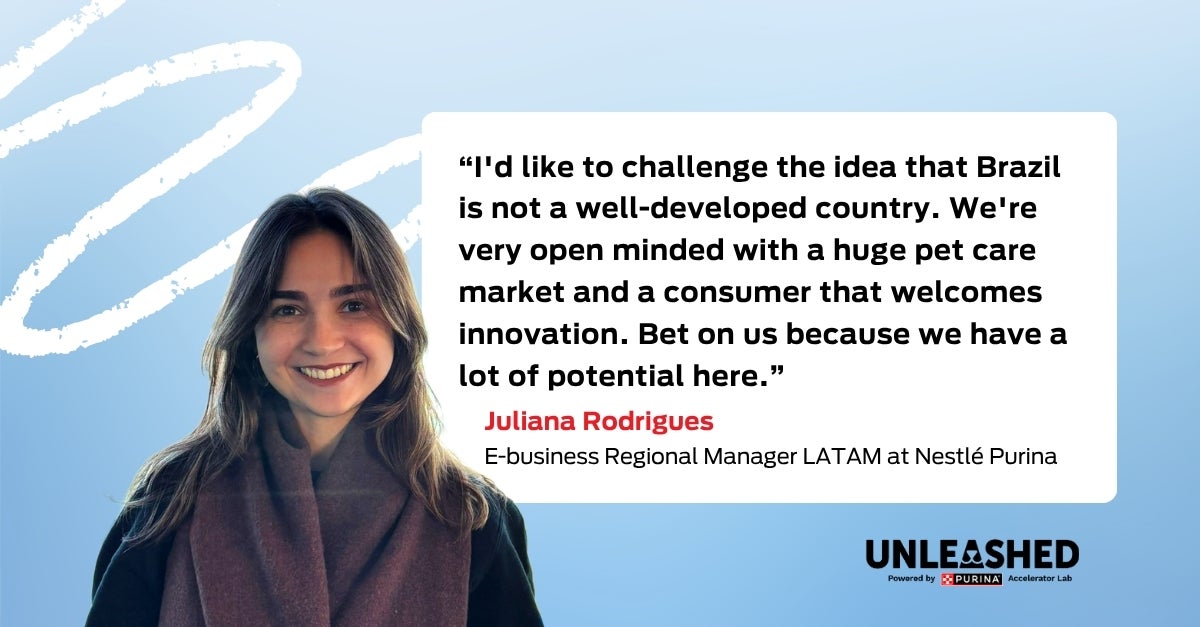
Juliana Rodrigues put it best: “I’d like to challenge the idea that Brazil is not a well-developed country. We’re very open minded with a huge pet care market and a consumer that welcomes innovation. Bet on us because we have a lot of potential here.”
At Unleashed by Purina, we’ll be keeping a close eye on this space. Brazil is up next.
Written by Olivia de Santos, Pet Tech Writer @ Unleashed by Purina